There was a time when beauty did not arrive in a bottle.
It arrived in a small steel bowl of oil warmed between the palms. In a grandmother sitting behind you, parting your hair with her fingers. In turmeric mixed in the kitchen. In a bath that was not rushed. In fresh food served at the table. In going to bed at a reasonable hour because there was nowhere else to be.
Our grandmothers did not have serums named after peptides, acids or growth factors. They did not have twelve-step skincare routines. They did not have algorithms telling them what their skin was supposed to look like.
And yet, many of them understood something about beauty that we seem to have forgotten:
Beauty was never meant to be a daily battle against ourselves. It was a ritual of care.
Before Beauty Became Something We Bought
Today, beauty is one of the most sophisticated industries in the world. We have access to extraordinary skincare, dermatology, aesthetic treatments and cosmetic science. We can understand ingredients at a molecular level. We can address pigmentation, acne, photoageing, dehydration and countless other concerns with far more precision than previous generations could. That is progress.
But somewhere along the way, beauty also became synonymous with correction. Something is dull. Something is ageing. Something is uneven. Something needs fixing.
The result is a strange contradiction: we have more knowledge about beauty than ever before, yet many women feel more dissatisfied with their appearance than ever.
Our grandmothers approached beauty differently. Not perfectly. Not scientifically. And certainly not everything they did needs to be romanticised or replicated. But their rituals often contained a wisdom worth reconsidering: care before correction.
The Ritual of Oiling
Ask an Indian woman about childhood beauty rituals and there is a good chance hair oiling appears somewhere in the story. Coconut oil. Sesame oil. Almond oil. Mustard oil in some homes. Different families had different traditions, but the ritual was remarkably similar.
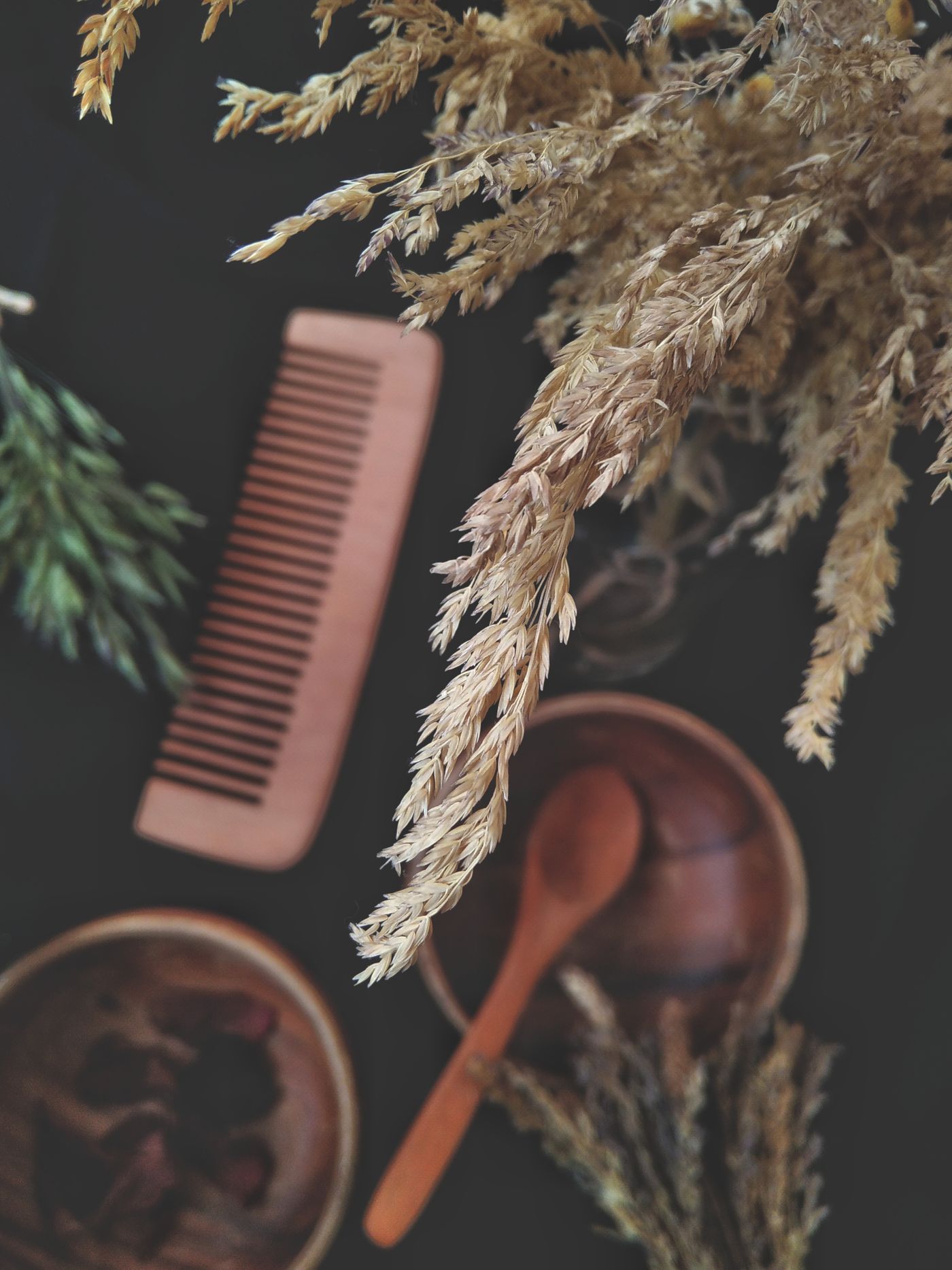
Oil was applied slowly. The scalp was massaged. Hair was combed. Someone took time. And that last part may be the most important.
Today we tend to think of beauty in terms of outcomes: less hair fall, more shine, better texture, stronger roots. But oiling was also about touch.
A mother oiling her daughter's hair was not simply applying a product. She was creating a moment of physical connection.
Perhaps this is one reason some beauty rituals stay in our memory long after we stop doing them. They were never only about beauty. They were about being cared for.
The Beauty of the Kitchen
Before the words "clean beauty" and "natural skincare" became modern marketing categories, Indian kitchens were filled with ingredients that had long been used in everyday self-care. Turmeric. Besan. Rose water. Milk. Yoghurt. Neem. Aloe. Sandalwood. Saffron.
These ingredients belonged to a broader culture in which food, beauty and wellbeing were not always treated as completely separate worlds. The kitchen was not a laboratory, and we should be careful about turning every traditional ingredient into a modern miracle claim.
But there is something beautiful about the underlying idea: what nourishes you can also become part of how you care for yourself. That philosophy feels surprisingly modern today.
Beauty Was Also About Rhythm
Perhaps the greatest thing our grandmothers knew was not a particular ingredient. It was rhythm. Morning had a rhythm. Meals had a rhythm. Bathing had a rhythm. Rest had a rhythm. Social life had a rhythm. Festivals had a rhythm. Even beauty had a rhythm.
You did not necessarily need to do something extraordinary every day. You repeated small acts of care. And repetition creates ritual.
Modern beauty, by contrast, often encourages novelty: the newest ingredient, the newest treatment, the newest device, the newest trend. But skin does not necessarily need novelty. It often needs consistency.
The Face Was Not the Whole Woman
There is another lesson worth recovering. Traditional beauty rituals were often connected to the whole person: food, sleep, hair, skin, movement, bathing, clothing, adornment, conversation and community. Beauty existed within life. It was not a separate project.
Today, we can spend an extraordinary amount of time working on the face while neglecting everything around it. We can buy an expensive serum and sleep five hours. We can invest in treatments and spend the entire day sitting. We can follow a complicated skincare routine while eating hurriedly at our desks.
Perhaps the ancient lesson is simpler: beauty does not exist in isolation from the way we live.
They Understood the Pleasure of Taking Time
There is something almost luxurious about the beauty rituals of another era. Not because the ingredients were expensive. Often, they were not. The luxury was time.
A slow head massage. A proper bath. Hair being brushed. A face being gently massaged. Freshly prepared food. Getting dressed without rushing. Sitting down for tea. These were ordinary things. But ordinary things become extraordinary when we give them our full attention.
This is perhaps one of the deepest ideas behind UNTRENDED: we don't necessarily need more. We need to experience what we already have more deeply.
What We Should Keep — And What We Should Leave Behind
Looking backwards does not mean believing that everything from the past was better. It wasn't.
Modern dermatology has given us evidence-based treatments and ingredients that can genuinely improve skin health. We should use them. We should also question traditional practices when they are unsupported, irritating or unsafe.
Not every kitchen ingredient belongs on every face. Not every old remedy deserves to become a viral beauty hack. The point is not to return to the past. The point is to recover the wisdom that still belongs in the future.
And perhaps that wisdom is less about specific recipes and more about a philosophy of care.
Five Grandmother Rituals Worth Bringing Back
01 — Make Hair Oiling a Ritual, Not a Task
Whether or not oiling suits your particular scalp or hair type, the larger ritual is worth reclaiming.
Slow down. Massage. Touch. Breathe. Let someone else care for you sometimes.
02 — Turn Bathing Into a Pause
A shower can be something you rush through, or it can be a transition between one part of your day and another.
Put the phone away. Use your favourite soap or body oil. Take a few extra minutes. Let the ritual signal that the day is changing.
03 — Eat Food That Feels Like Home
Beauty is not built through restriction alone.
Nourishing food, adequate protein, fibre, micronutrients and pleasure all belong in the conversation. And sometimes the most nourishing meal is also the one that carries a memory.
04 — Give Your Skin Consistency
Instead of constantly chasing the next trend, understand what your skin actually needs.
A simple, consistent routine can be more meaningful than a bathroom shelf full of products you rarely use. And when a skin concern persists, there is no shame in asking a qualified dermatologist.
Ancient wisdom and modern science can coexist.
05 — Bring Beauty Back Into Everyday Life
Wear the earrings. Use the perfume. Put flowers on the table. Make the tea properly. Massage your hands. Wear the colour you love.
Beauty does not have to wait for a wedding, holiday or special occasion.
The ordinary day is an occasion too.
The Future of Beauty May Not Be About Looking Younger
Perhaps this is the most important lesson. Our grandmothers were not necessarily trying to look twenty years younger. They were trying to look well. Fresh. Cared for. Present. Beautiful in a way that belonged to them. There is a difference.
The modern beauty conversation has become increasingly obsessed with age: how to prevent it, how to hide it, how to reverse it.
But perhaps we can build a different relationship with ageing. We can care for our skin without declaring war on time. We can use science without becoming obsessed with correction. We can enjoy beauty without making youth the price of admission. We can grow older and still become more radiant.
What We Inherited
When I think about the beauty rituals passed down through generations, I don't think the greatest inheritance was turmeric, oil or rose water. It was something much less tangible.
It was the understanding that care can be a ritual. That beauty can be slow. That touch matters. That food matters. That rest matters. That looking after yourself doesn't have to feel like another item on your to-do list.
And perhaps, in a world where beauty has become increasingly complicated, that is exactly what we need to remember.
Not everything old needs to come back. But some things are worth carrying forward.
The warm oil. The slow bath. The shared recipe. The afternoon tea. The grandmother's hands. The permission to pause.
And the quiet understanding that beauty was never just about how a woman looked. It was about how beautifully she lived.