
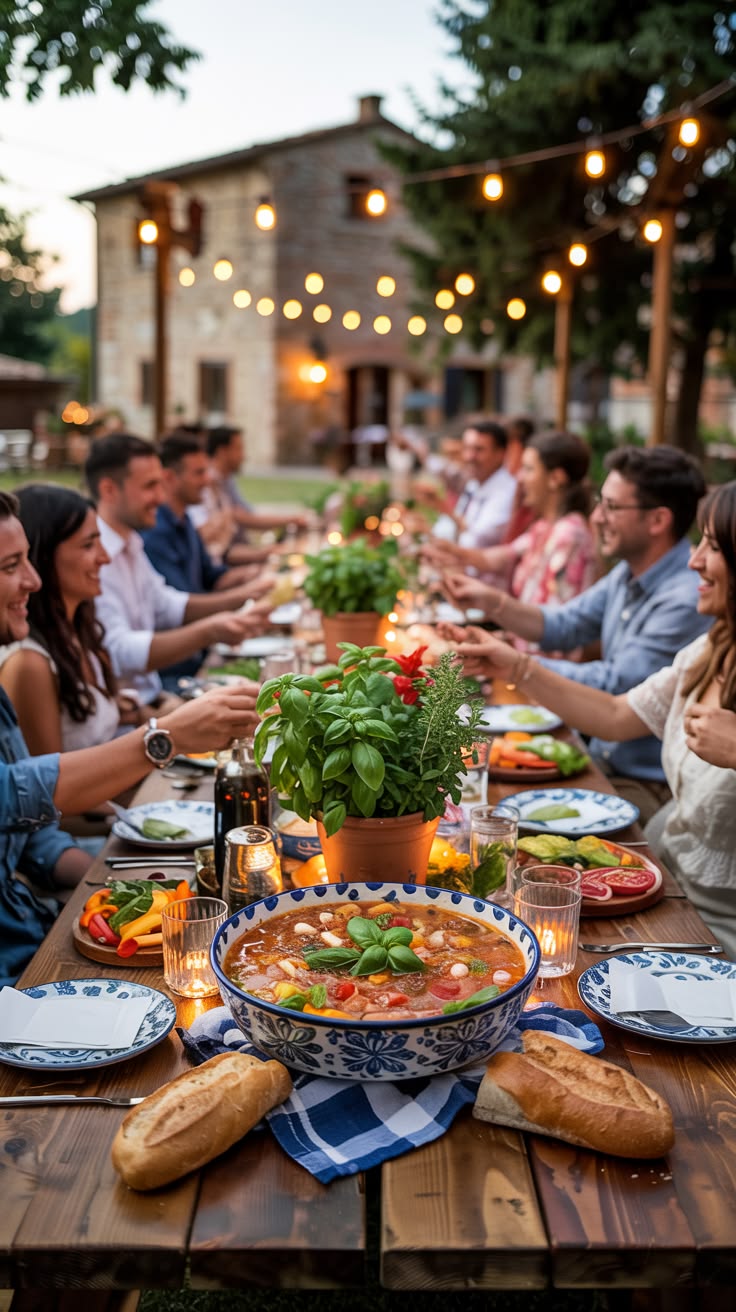
There was a time when people simply gathered.
For tea. For lunch. For festivals. For birthdays. For no particular reason at all.
Someone would arrive carrying something. Someone would put the kettle on. Someone would begin telling a story, and before anyone realised it, an afternoon had disappeared.
Perhaps that was the real luxury of those gatherings: nobody was trying to optimise them.
Today, we have more ways to communicate than ever before, yet meaningful connection can sometimes feel strangely difficult to find. We have hundreds of contacts, group chats, followers, likes and notifications, but what many of us still crave is something much simpler—a room where we can put our phones down and feel completely present.
I think there is an art to creating such a room.
What makes a gathering meaningful?
It isn't necessarily the flowers, the table setting or the menu. It isn't even the number of people invited.
A good gathering has intention.
It gives people permission to slow down, to talk without rushing, to listen properly, to laugh loudly and to stay a little longer. It creates an environment where conversation can move beyond what everyone does for a living and into what everyone is actually experiencing.
The most memorable gatherings are rarely the most elaborate. They are the ones where people leave feeling that something happened—not because there was a spectacular event, but because they connected.
The Indian art of gathering
Our traditional Indian homes understood this instinctively.
The courtyard, the kitchen, the dining table, the neighbourhood, the festival and the afternoon cup of tea were all places of connection. Food was rarely just food. Tea was rarely just tea. There was always a story, someone dropping by, someone staying longer than expected, someone insisting that you eat a little more.
These rituals created belonging almost without trying.
We didn't necessarily call it social wellness or community building. It was simply life.
And perhaps that is something worth remembering.
Because modern life has made convenience extraordinarily easy, but connection requires something else: presence.
The beauty of an unhurried table
One of my favourite ways to create connection is to begin with food.
Not because the food needs to be extraordinary, but because a shared meal gives people something to gather around. It slows conversation down. It creates pauses. It gives strangers something to talk about and friends an excuse to stay.
Put the good plates on the table. Make the tea properly. Cook something that has a story behind it. Ask people to leave their phones aside for the duration of the meal.
Then ask questions that cannot be answered with a polite “fine.”
What are you looking forward to?
What have you changed your mind about?
What are you learning about yourself?
What is something from your childhood you would like to bring back?
Suddenly, dinner becomes more than dinner.
It becomes memory, conversation and connection.
Women need spaces where they don't have to perform
I think this matters particularly for women.
We spend so much of our lives performing different roles—mother, daughter, partner, professional, caregiver, organiser, businesswoman. We become very good at showing up for everyone else, while rarely having a space where we can simply arrive as ourselves.
A meaningful gathering doesn't need networking, achievement or comparison.
It can simply offer companionship.
A place where nobody needs to be the most successful person in the room. A place where someone can say, “I'm not having a great week,” without needing to immediately explain or fix it.
There is enormous beauty in that kind of space.
The new luxury is belonging
We often define luxury through what we own: beautiful homes, fine jewellery, expensive holidays, exceptional food.
But perhaps the most valuable luxury in modern life is something that cannot be bought quite so easily.
People who know you.
People you can call.
People with whom you can laugh until your stomach hurts.
People who will sit beside you when there is nothing to fix.
A table where you don't have to perform.
That is wealth too.
Perhaps this is why we need to stop thinking only about creating events and start thinking about creating rituals of gathering.
A monthly lunch. A Sunday tea. A women's circle. A seasonal dinner. An annual reunion.
When gathering becomes a ritual, relationships deepen. When relationships deepen, community begins to emerge.
And perhaps the future of wellness isn't another app, another programme or another product.
Perhaps it is a table.
A cup of tea.
A long conversation.
And people who stay.
That may be one of the oldest forms of wellbeing we have—and one of the most beautiful.